Super Smash Bros. Brawl
| “ | They're back. Stronger than ever. And they've brought friends. Lots of them. | ” |
| —North American commercial | ||
| “ | An all-star battle! | ” |
| —Wii save data description | ||
| Super Smash Bros. Brawl | |
|---|---|
   | |
| Developer(s) | Sora HAL Laboratory Game Arts Monolith Soft Paon Intelligent Systems |
| Publisher(s) | Nintendo |
| Designer(s) | Masahiro Sakurai (director) Kazushige Nojima (scenario writer)[1] |
| Engine | Havok |
| Released |  January 31, 2008 January 31, 2008 March 9, 2008 March 9, 2008 June 26, 2008[2] June 26, 2008[2] June 27, 2008[3][4] June 27, 2008[3][4] April 29, 2010 April 29, 2010
|
| Genre(s) | Crossover Platform Fighter Party |
| Mode(s) | Single player, Multiplayer, Online multiplayer[5] |
| Ratings | ACB: PG CERO: A ESRB: T PEGI: 12 |
| Platform(s) | Wii |
| Media | Wii Optical Disc (Double-layer) |
| System requirements | 128 free blocks of memory in the Wii System Memory |
| Input methods | Wii Remote, Nunchuk, Classic Controller, GameCube controller[6] |
Super Smash Bros. Brawl (大乱闘スマッシュブラザーズX, Great Fray Smash Brothers X), often shortened to "SSBB" or "Brawl" (スマブラX), is the third installment in the Super Smash Bros. series published by Nintendo. The game was directed by Masahiro Sakurai, who also created the two preceding Super Smash Bros. games, and was developed by an ad hoc development team consisting of Sora, Game Arts, and staff from other developers. The game released for Wii on January 31st, 2008 in Japan, March 9th, 2008 in North America, June 26th, 2008 in Australia, and June 27th, 2008 in Europe. The game requires 128 free blocks of memory in the Wii System Memory. A limited edition release of the game came with an extra cardboard sleeve depicting all of the characters available by default, and came with two postcards, providing a biopic on Zero Suit Samus and Zelda, giving a short summary of them, and showing images of their special moves.
Brawl is fundamentally similar to its predecessors Super Smash Bros. and Super Smash Bros. Melee, being a fighting game that contains characters with simple movesets and an emphasis on movement and ringouts. However, Brawl introduced many elements that would become standard in later installments, such as a stage builder and support for online play through the Nintendo Wi-Fi Connection.[7] No data, except some vault data, can be copied to an SD Card or transferred onto another Wii. If the player does not create a save file when they start, they are unable to play via Nintendo Wi-Fi Connection, and vault data will not be saved. However, as of May 20, 2014, the Nintendo Wi-Fi Connection has been shut down, therefore making it impossible for anyone to play Brawl online without hacking. While some characters were cut from Melee, many more were introduced, including third-party characters for the first time in the series.
Most of the game's musical score is made up of newly-arranged versions of pieces that originated in earlier video games starring the characters featured in Brawl, with the remainder taken directly from the original games. The new arrangements were composed in a collaboration between 38 renowned video game composers[8] and has been critically acclaimed for its representation of different generations in gaming history.[9]
Brawl received universal acclaim, with praise centered on its entertainment value despite issues relating to its content loading times, and its musical score was lauded for its representation of different generations in gaming history. The diverse selection of single-player content continues to be a noteworthy point of praise in comparison to both its predecessors and successors, while some of its gameplay mechanics and character balancing have been a point of criticism with fans.
Opening movie[edit]
The CGI opening movie of Super Smash Bros. Brawl utilizes scenes from The Subspace Emissary, along with lots of selections of Versus Mode matches, as opposed to featuring unique footage in the manner of the game's predecessor, Super Smash Bros. (Super Smash Bros. Melee used footage from its E3 trailer).
Fighters[edit]


The cast of 35 playable characters (39 if Zelda, Sheik, Samus, Zero Suit Samus, Squirtle, Ivysaur and Charizard are all treated as separate without counting the trainer himself) includes 20 (21 including Sheik) returning veterans from Melee and 15 newcomers (18 including transformations). Of these, 21 are starter characters (25 if the seven transformation characters above are all treated as separate) and the other 14 need to be unlocked. Many of the returning characters have been updated or refined since their last appearance, either in terms of appearance, fighting capabilities, or both. For example, Link and Fox have taken on new designs from more recent titles, while Samus Aran has gained the ability to change into a new form, Zero Suit Samus, by using her Final Smash or by the player pressing a certain button after picking Samus and before picking a stage.
Five characters do not return from Melee: Super Mario's Dr. Mario, The Legend of Zelda's Young Link, Pokémon's Mewtwo and Pichu, and Fire Emblem's Roy. Of these, only Mewtwo was not a moveset clone; and it is assumed to have been the furthest into development of the cut characters due to having the most unused code out of the cut veterans.
Except for the Mario series, each of those series' added new characters to the roster: Toon Link for The Legend of Zelda, Pokémon Trainer (who controls Squirtle, Ivysaur, and Charizard) and Lucario for Pokémon, and Ike for Fire Emblem. In addition, several other series received new characters, with Kirby gaining the most newcomers out of these series gaining both Meta Knight and King Dedede. The others include Donkey Kong with Diddy Kong, Metroid has Samus' aforementioned "Zero Suit" form as a transformation, Star Fox with Wolf, and EarthBound with Lucas.
New character slots which go to Nintendo series previously unrepresented include Pit, the first appearance of the Kid Icarus series since the 1991 Game Boy game Kid Icarus: Of Myths and Monsters; Wario, originally a Mario spin-off but long launched into a franchise of his own; Captain Olimar from the Pikmin series; and the NES accessory R.O.B.
Finally, Solid Snake from the Metal Gear franchise and Sonic the Hedgehog from his eponymous series become the first third-party characters to appear in a Super Smash Bros. game.
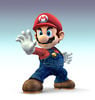

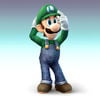
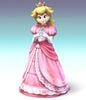
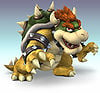
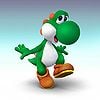

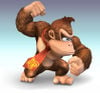



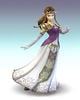
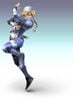
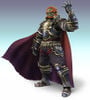
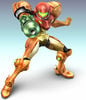

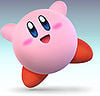

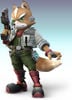

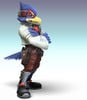
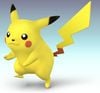

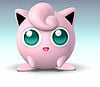
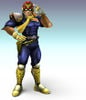

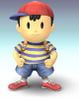

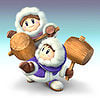

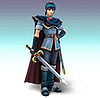



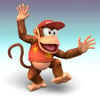
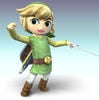


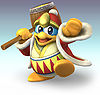
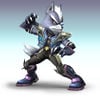
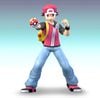

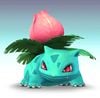
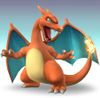
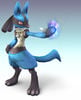
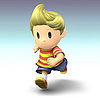
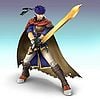
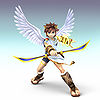

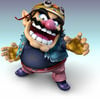

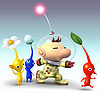

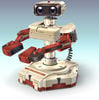

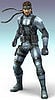

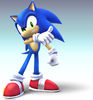

Bold denotes unlockable characters.
Collectibles[edit]
The number of Trophies, statuettes of Nintendo characters and objects which can be collected in-game, was almost doubled from Melee.[10] A related feature was the introduction of stickers, small pieces of Nintendo artwork which can be picked up from offline and online matches, along with the Smash Service's "Spectator Mode." Stickers also make an appearance in the single-player and multiplayer modes, such as the Stadium mode. Stickers also act as a sort of enhancement to the characters' abilities when using attacks in Adventure Mode: The Subspace Emissary.[11]. Through the Trophy Hoard and Sticker Album, players can place trophies and stickers onto virtual backgrounds and take snapshots, all of which is recorded into the Wii's internal hard drive or onto SD cards depending on the player's choosing. From this point, these virtual items can be sent to other players via Nintendo Wi-Fi Connection, "WiiConnect24".[10][11]
The inclusion of a new Super Smash Bros. element, collectable CDs, which, when obtained, offer new music selections for playable stages. Although this can add more variety to the music played on a stage, the music selection will always be at random. However, the player can adjust how often a track can be played from the options menu. [12]
By completing stages in Classic Mode[13], All-Star Mode and The Subspace Emissary, coins can be earned. The coins can be used to play the Coin Launcher to win more stickers or trophies, to "pay" for Continues in Classic and All-Star Mode, to bet on the outcome of Spectator Mode matches, and to choose stages in online play.
Masterpieces[edit]
Brawl introduces "Masterpieces", time-limited Virtual Console game demonstrations, to the Super Smash Bros. series. The international release has twelve such games available, each of which features one or more of the playable characters from Brawl. Seven games are available for play to begin with, with five more unlockable by completing Challenges, which range from Mario's debut in Donkey Kong to the critically acclaimed late Nintendo 64 title The Legend of Zelda: Ocarina of Time. The time limits on each play last between 30 seconds (Donkey Kong), to five minutes (Ocarina of Time).
The Japanese release has two additional Masterpieces not included in the international releases — the SNES games Mother 2 (known as EarthBound in its US release) and Fire Emblem: Monsho no Nazo.
Music[edit]
On May 22, 2007, Sakurai revealed a list of 38 composers providing the musical score for the game. In his accompanying statement, Sakurai said that he had asked the composers, who come from a variety of companies and have written music for first, second, and third-party games, "to listen to an elite selection of Nintendo music and arrange several of their favorite songs."[8]
Each of the game stages have multiple musical tracks which players can listen to using the new "My Music" feature, including some songs that were taken directly from other games without any modification or special arrangement. This feature also allows the player to adjust the frequency of how often a music track is played on a given stage. Collecting CDs expands the range of music available.[12]
Stages[edit]


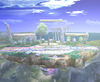
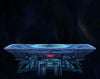
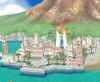
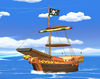
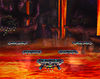
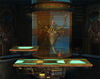
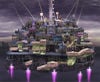
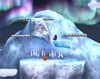
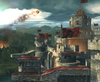
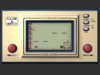
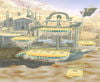
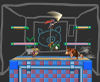
Brawl features 41 VS. Mode stages, of which 29 are starter stages, and 12 unlockable. 31 are new to Brawl, including new incarnations of Battlefield and Final Destination, and 10 return from Melee. Every universe with a playable character sans R.O.B. has at least one stage, but Brawl also introduces stages from universes without playable characters for the first time, with Animal Crossing, the Nintendo DS and Electroplankton all receiving stages. Brawl also has an option to create custom stages with the Stage Builder, with three sample stages already built.